This content is for informational purposes only and is not medical advice. Collagenium is published by a research-driven editorial team, not licensed medical professionals. See our editorial standards and methodology. Consult a registered dietitian, physician, or pharmacist before starting any supplement, especially if you have existing health conditions, are pregnant or breastfeeding, or take medications.
Bone broth is often sold as the original, natural collagen source, and there is truth to that. People have simmered bones for collagen-rich broth across cultures for centuries. But the marketing skips over an inconvenient fact: you have no idea how much collagen is actually in your cup. Here are seven things worth knowing before you rely on bone broth for collagen, backed by what the evidence does and does not show.
1. Bone broth genuinely contains collagen
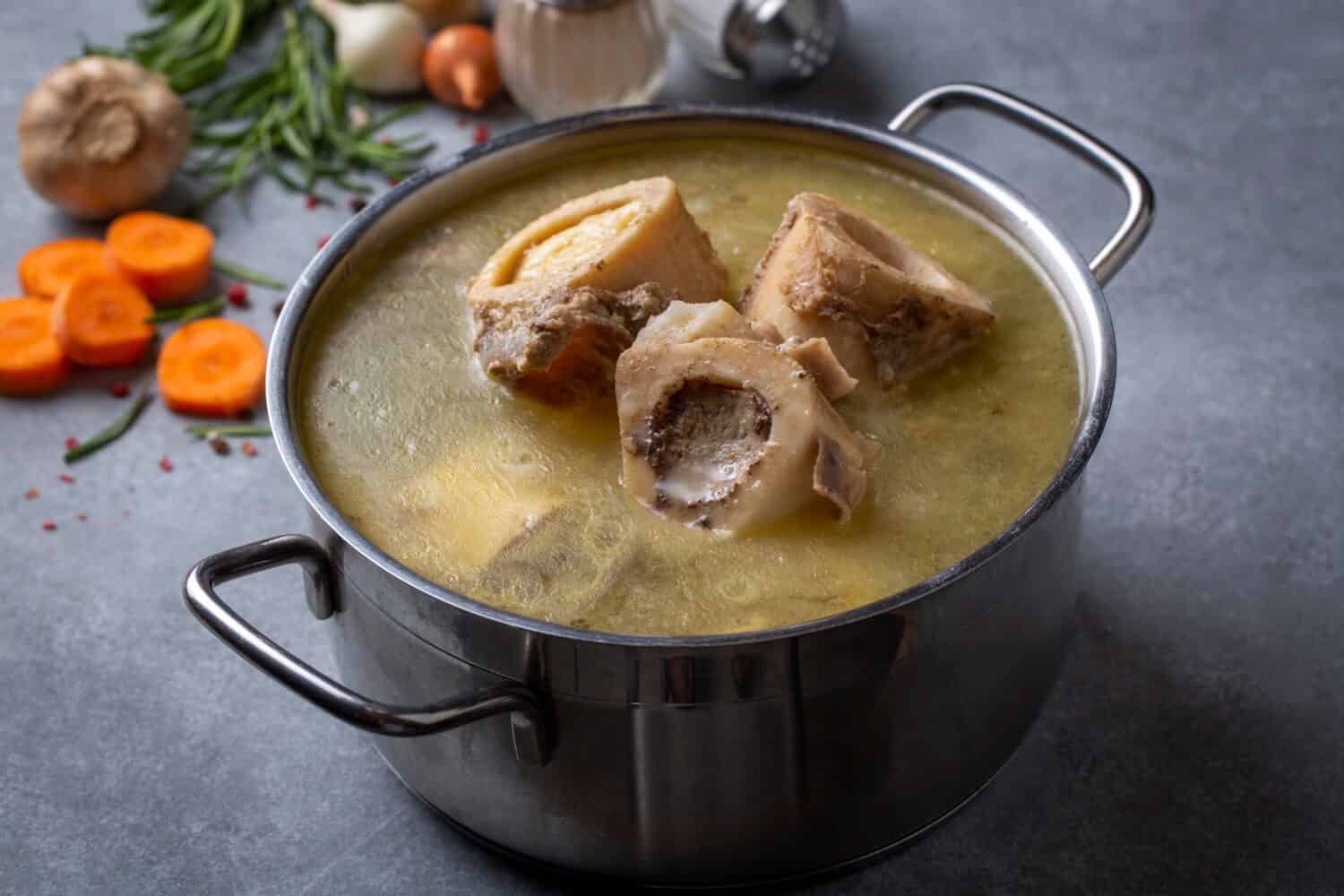
This part is real. When you simmer bones, cartilage, and connective tissue in water, the collagen breaks down and dissolves into the liquid as gelatin. That is why a well-made broth turns wobbly and jelly-like in the fridge. The gel is dissolved collagen, and the more collagen-rich the bones, the firmer the gel.
Once you drink it, that collagen works the same way supplement collagen does: your digestive system breaks it into amino acids and small peptides your body can use, including for building its own connective tissue. So the mechanism is not in question. The question is quantity and consistency, which is where the next points come in. For the wider list of dietary sources, see our collagen-rich foods guide.
2. The collagen amount is highly variable and never labeled
This is the single most important thing to understand. Unlike a peptide powder that states an exact gram count per scoop, bone broth has no standardized collagen content, and it swings enormously based on how it was made.
Documented factors that change the amount:
- Bones used. Feet, knuckles, and joints are collagen-dense; plain marrow bones are not.
- Cooking time. A few hours extracts little; 12 to 24-plus hours extracts far more.
- Water-to-bone ratio. More water means a more dilute broth.
- Temperature. A gentle simmer extracts better than a hard boil.
Estimates for a cup of well-made broth range from roughly 5 to 15 grams of collagen, but a weak batch can contain very little. Two homemade batches, or two store brands, can differ several-fold. If your goal depends on hitting a specific dose, that variability is a real limitation.
3. Broth gives you more than collagen (for better and worse)
Bone broth is a whole food, so you are not getting isolated collagen. You also get:
- Amino acids like glycine, proline, and glutamine
- Minerals such as calcium, magnesium, and phosphorus leached from bone
- Glucosamine and chondroitin from cartilage
- Small amounts of hyaluronic acid from connective tissue
That complexity is a genuine plus if you want nutrition beyond collagen. The flip side is that “more compounds” also means “less control.” You cannot know how much of anything you are getting. And one caveat worth flagging: a study on metals in bone broths found that broths can also leach trace metals from bone, another reason quality of ingredients matters.
4. Bone broth vs collagen peptide powder, side by side
Both deliver collagen. They differ on precision, convenience, and what else comes along. This is the honest comparison.
| Factor | Bone broth | Collagen peptide powder |
|---|---|---|
| Collagen per serving | Variable, unlabeled (roughly 5 to 15 g/cup, sometimes far less) | Measured, typically 10 to 20 g/scoop |
| Consistency | Batch to batch swings widely | Same dose every time |
| Extra nutrients | Amino acids, minerals, glucosamine, chondroitin | Usually collagen only (some add vitamin C or HA) |
| Convenience | Hours to make or buy, refrigerate, heat | Stir into any drink in seconds |
| Taste | Savory, meaty | Neutral when unflavored |
| Cost per gram of collagen | Higher and unpredictable | Lower and predictable |
| Best for | Whole-food nutrition, cooking, comfort | Precise, repeatable dosing |
For a deeper head-to-head, see collagen vs bone broth and, if you are comparing the powdered versions, collagen vs bone broth protein.
5. If you make it at home, technique decides the collagen
You can push broth toward the high end of that collagen range with the right method.
Best bones for collagen:
- Chicken feet (extremely high in collagen)
- Beef knuckles and joints
- Oxtail
- Pig feet
- Neck bones
- Marrow bones (add collagen-rich joints too)
Basic method:
- Place 2 to 3 pounds of bones in a large pot or slow cooker
- Cover with cold water by about 2 inches
- Add 2 tablespoons apple cider vinegar to help extraction
- Bring to a gentle simmer, not a rolling boil
- Skim foam that rises
- Simmer 12 to 24 hours for chicken, 24 to 48 hours for beef
- Strain and cool
The test of success is the fridge test: if it gels into a wobbly set, you extracted plenty of collagen. If it stays thin and watery, you did not. For a collagen-first ingredient, our chicken feet for collagen guide explains why feet outperform plain bones.
6. Store-bought broth quality is all over the map
Not everyone wants to simmer bones for a day, and commercial bone broth has improved. But the label “bone broth” is not a guarantee.
When buying, look for:
- Long-simmered products (good brands mention cook time)
- Simple ingredients: bones, water, vinegar, maybe vegetables
- Gels when cold, the sign of real collagen content
- Reputable brands focused on broth rather than generic stock
Avoid thin, watery products that are essentially seasoned stock or bouillon with minimal collagen. True bone broth should set up gelatinous in the fridge. Bone broth protein powders are a middle path: dried, concentrated broth you reconstitute, more convenient than liquid but still less precise than peptides.
7. For most goals, use both, but do not rely on broth for dosing
Here is the practical takeaway. Bone broth and peptides are not rivals; they answer different needs.
Lean toward bone broth if you value whole-food nutrition, enjoy it in cooking, want the extra minerals and joint compounds, and precise dosing does not matter to you. Lean toward peptides if you need a consistent, measured intake, want something tasteless to add to any drink, or are following a research-based dose. Note that the collagen research showing skin and joint benefits, including work on collagen hydrolysate for bone and joint disease and the 2019 skin review, used measured hydrolyzed collagen, not broth.
Many people do best combining them: broth as a nourishing food, a peptide scoop for reliable daily collagen. And whichever you choose, remember your body needs vitamin C to actually build collagen, and broth contains essentially none, so pair it with fruits or vegetables.
Bottom line
Bone broth is a legitimate, time-tested collagen source with nutritional extras you will not get from an isolated powder. Its weakness is precision: the collagen content is variable and unlabeled, so you can never be sure of your dose. If you love broth, keep drinking it, and make it with feet and joints simmered long enough to gel. If you need a dependable daily collagen amount, a peptide powder is the more certain tool. For most people, the smartest move is both.
Want to learn more? Explore our related guides:
Frequently asked questions
How much collagen is in bone broth?
It varies widely and is never labeled. Homemade broth simmered 12 to 24 hours with joints and feet may contain roughly 5 to 15 grams of collagen per cup, but a thin broth from plain bones can have very little. Unlike a peptide powder that lists an exact gram amount, bone broth collagen is inherently inconsistent.
Is bone broth as good as collagen peptides?
Both supply collagen that your body breaks down and uses the same way. Peptides give you a precise, repeatable dose and mix into anything. Bone broth gives you a whole food with extra amino acids, minerals, and joint compounds, but at an unpredictable collagen amount. Neither is universally better, they serve different goals.
How long should you simmer bone broth for collagen?
For good collagen extraction, simmer at least 12 hours, and up to 24 to 48 hours for dense beef bones. A gentle simmer works better than a rolling boil. You know you succeeded when the cooled broth gels, since that jiggle is dissolved collagen turned to gelatin.
Which bones make the most collagen-rich broth?
Joints, knuckles, and feet, which are packed with cartilage and connective tissue. Chicken feet, pig feet, beef knuckles, and oxtail produce the most gelatinous broth. Plain marrow bones alone yield far less collagen, so include collagen-heavy cuts.
Is store-bought bone broth a good collagen source?
Quality varies a lot. Look for long-simmered products that gel when cold and list simple ingredients like bones, water, and vinegar. Many products labeled broth are closer to seasoned stock with little collagen, so a thin, non-gelling liquid is a red flag.
Sources
Every health claim in this article is traceable to a primary source. See our editorial standards.
- 1.
- 2.
- 3.
Tags

Collagenium
Research-driven editorial teamEditorial & Research Team
Collagenium synthesizes peer-reviewed studies on collagen, skin health, and connective-tissue science into reader-friendly guides. We cite every claim and are not licensed medical professionals. See /methodology/ for our editorial standards.